If you spend 8+ hours a day in an office, you’re breathing recycled air filled with toxins from furniture, electronics, and carpet off-gassing. The good news? The best plants for improving office air quality are so easy to care for that even the busiest workers can keep them alive. Spider plants, snake plants, and peace lilies don’t just look good on your desk—they actively filter out formaldehyde, benzene, and xylene while you work.
Here’s what you need to know: indoor air is often 2-5 times more polluted than outdoor air, according to the EPA’s indoor air quality guidelines. Adding the right plants to your office creates a cleaner, more focused work environment without extra effort on your part.
Related: How to Keep Office Plants Alive in Austin: Complete Guide
Related: Best Home Office Plants Austin 2026: Top 5 Ranked
Why Office Plants Actually Purify Air
Plants don’t just look pretty. They’re tiny air filters that work 24/7.
During photosynthesis, plants absorb carbon dioxide and release oxygen. But that’s just the surface-level stuff. The real magic happens in the soil and roots. Microbes in the potting mix actively break down volatile organic compounds (VOCs) and toxins, pulling them out of the air you breathe. It’s a natural filtration system that’s been running since plants existed.
For office spaces with stagnant air and limited windows, this matters a lot. You get better focus, fewer headaches, and cleaner air without running an expensive air purifier 24/7.
Top Plants for Purifying Office Air
Spider Plant (Chlorophytum comosum)
This is your MVP. Spider plants consistently rank #1 for air purification because they remove formaldehyde and xylene—two of the most common indoor toxins. They’re nearly impossible to kill, which is why you’ll find them in offices everywhere. They thrive in medium to bright indirect light and tolerate irregular watering. If you’ve never kept a plant alive, start here.
Snake Plant (Sansevieria trifasciata)
Snake plants are the ultimate low-maintenance air cleaner. They’re so hardy they’ll forgive you for forgetting to water them for weeks. They remove benzene, formaldehyde, trichloroethylene, and xylene—basically the full hit list of office toxins. Plus, they look modern and sharp on a shelf, so they won’t make your workspace feel cluttered or unprofessional.
Peace Lily (Spathiphyllum)
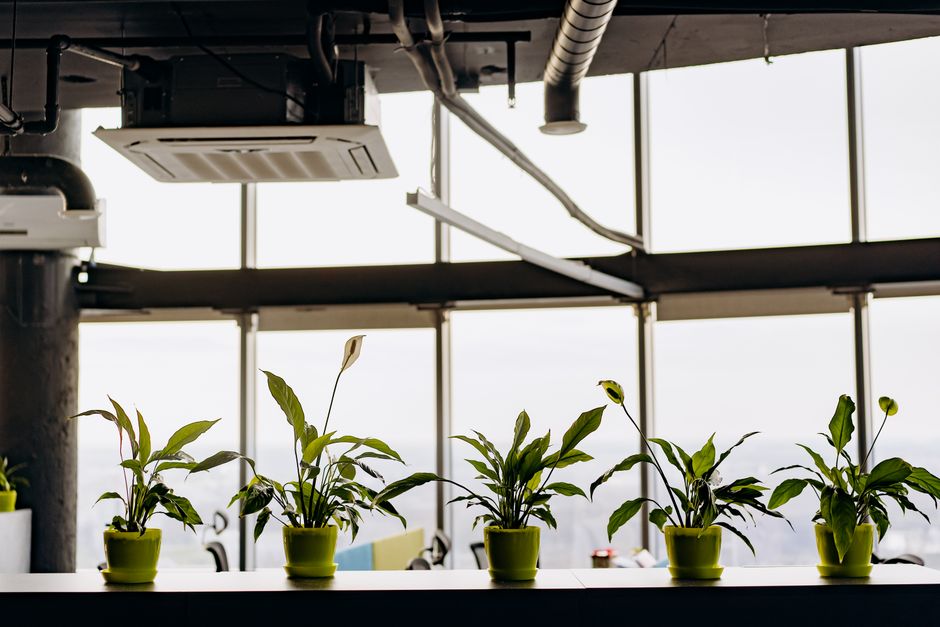
Peace lilies are popular in offices for a reason. They have beautiful white flowers, they adapt to low light (perfect for interior offices without windows), and they’re highly effective at removing multiple toxins. Pro tip: they’ll actually droop when the soil gets dry, so they give you a visual signal that it’s time to water. You literally can’t miss the hint.
Golden Pothos
This trailing plant is perfect if you have a shelf or hanging spot. It removes formaldehyde and xylene and grows quickly, so you’ll see visible progress. It tolerates low light and irregular watering, making it ideal for offices where plants don’t get daily attention. It’s also incredibly forgiving if you overwater it by accident.
Related: Low Light Plants for Office Corners: 7 Hardy Options
Rubber Plant (Ficus elastica)
Rubber plants make a bold statement while cleaning your air. They’re excellent at removing formaldehyde and require minimal maintenance once established. They prefer bright, indirect light and like to dry out slightly between waterings. If you want an air-purifying plant that also serves as a design statement, this is it.
Dracaena ‘Janet Craig’ (Dracaena fragrans)
Dracaenas are underrated air cleaners. Janet Craig varieties are compact and fit nicely in corners or on desks. They remove formaldehyde, benzene, and trichloroethylene while tolerating low light and neglect. They grow slowly, so you won’t be repotting every season.
English Ivy (Hedera helix)
English ivy removes formaldehyde and airborne toxins more effectively than many other houseplants. It works best in cooler offices (around 65-75°F) and prefers consistent moisture. If your workspace feels more like a cold, corporate box, ivy adapts well to that environment.
Aloe Vera (Aloe barbadensis)
Aloe vera does double duty. It purifies air AND gives you a plant with practical uses (gel for burns, dry skin, etc.). It thrives on neglect, tolerates low light, and rarely needs water. If you want a low-maintenance plant that pulls its weight on both fronts, aloe is your answer.
How Many Plants Do You Actually Need?
This depends on your office size and air quality. Studies suggest you need roughly one good-sized plant (or 3-4 smaller ones) per 100 square feet of office space to see measurable air quality improvements.
Related: Plants That Improve Air Quality in Offices: Top Picks
For a standard cubicle or small office (100-200 sq ft), 2-3 medium plants or 4-6 smaller ones is a solid baseline. For a larger open office, you’ll want more clustering of plants in different zones.
The catch? You have to actually maintain them. A dead plant does nothing. That’s why choosing low-maintenance varieties matters. When you pick spider plants, snake plants, and pothos over finicky options, you’re far more likely to keep them alive long enough to see air quality benefits.
Where to Place Plants in Your Office

Put plants where air circulates but they’re not in direct harsh sunlight from a south-facing window. If your office has poor natural light, focus on low-light tolerant varieties like peace lilies, dracaenas, and snake plants.
If you have a window, place plants there and rotate them occasionally so all sides get light. Corner shelves, filing cabinets, and desks are all fair game. Just avoid placing plants directly under AC vents or heaters, which will dry them out faster.
One strategy many professionals use: cluster 3-4 smaller plants together in a high-traffic area of the office. It creates a visual focal point and concentrates the air-purifying effect where people spend the most time. Whether you’re designing a solo home office or outfitting a commercial space, Nature Indoors specializes in custom plant placement that maximizes both aesthetics and air quality benefits.
Maintenance Tips to Keep Plants Alive (and Working)
Watering
The #1 reason office plants die is overwatering. Most office plants prefer to dry out slightly between waterings. Stick your finger an inch into the soil. If it feels dry, water. If it feels moist, skip it. For spider plants and pothos, err on the side of underwatering.
Light
Match the plant to your office’s light conditions. If you have zero natural light, stick with peace lilies, dracaenas, and snake plants. If you have a bright window, most plants will thrive. Just rotate plants every few weeks so they grow evenly.
Dust the Leaves
Dust blocks pores and reduces the plant’s ability to absorb light and purify air. Once a month, wipe leaves gently with a damp cloth or give the plant a light misting. It takes 5 minutes and keeps your plants functioning at peak performance.
Fertilize Sparingly
Office plants in stable indoor conditions don’t need heavy feeding. A weak liquid fertilizer once every 2-3 months during growing season (spring and summer) is plenty. In winter, skip it entirely.
Can Office Plants Really Improve Air Quality?
Yes, but with a realistic caveat. A single plant won’t transform a stuffy office overnight. However, multiple plants in a space do measurably reduce VOC levels, increase oxygen, and create a healthier microclimate around where you work.
Beyond the air quality numbers, there’s a wellness factor that matters just as much. Studies show that having plants visible in your workspace reduces stress, boosts focus, and improves overall mental health. Whether you attribute that to cleaner air or the psychological benefit of being around living things, the result is the same: you feel better and work better.
If you’re serious about maximizing air quality and want expert guidance on plant selection, placement, and ongoing care tailored to your office’s unique lighting and layout, Nature Indoors offers custom interiorscape design and maintenance services specifically for Austin-area offices and homes.
FAQs About Office Plants and Air Quality

Do office plants actually remove toxins from the air?
Yes. Plants absorb toxins through their leaves and roots, and soil microbes break down volatile organic compounds. Multiple peer-reviewed studies confirm this. That said, plants are one tool in a broader air quality strategy—open windows when possible, use HVAC filters, and limit off-gassing sources. Plants amplify these efforts.
What’s the easiest air-purifying plant for a busy office?
Spider plant or snake plant. Both tolerate irregular watering, low light, and neglect. If you want zero-stress plant care, pick one of these two. You’ll water maybe once every 2 weeks and you’re done.
Can I keep air-purifying plants in a cubicle with no windows?
Absolutely. Peace lilies, dracaenas, and snake plants thrive in artificial light. Just make sure the office has overhead fluorescent or LED lighting. If your cubicle is dark, even these tough plants will struggle. In that case, ask your manager about brighter lighting or consider a small grow light bulb.
How often should I replace office plants?
With proper care, most office plants last years. Spider plants and snake plants can live 5-10+ years if maintained. If a plant starts declining despite good care, it’s time to replace it. A struggling plant won’t purify air effectively, so don’t feel bad about swapping it out for a healthier specimen.