Custom plant displays for restaurant interiors go way beyond just sticking a fern in the corner. When done intentionally, greenery becomes the backbone of your dining experience—softening hard edges, creating natural focal points, and making guests feel like they’ve stepped into somewhere special.
Whether you’re redesigning an open dining room, creating private nooks, or softening a stark bar area, plants can anchor your entire aesthetic and improve the way your space feels. Let’s walk through what’s actually possible and how to pull it off.
Related: Office Plant Design for Small Spaces: 7 Space-Smart Ideas
Related: Indoor Plant Design for Wellness Spaces: A Complete Guide
Understanding the Role of Plants in Restaurant Design
Before you start picking out displays, think about what plants need to do in your restaurant beyond looking good. They should work with your layout, fit your maintenance capacity, and match your brand’s vibe.
A fine-dining steakhouse needs something different than a casual brunch spot. Your plants should amplify what you’re already communicating to your guests—whether that’s calm, energy, luxury, or warmth.
Plants also solve real problems in restaurants: they absorb noise (which guests actually appreciate), create visual barriers between tables, fill empty vertical space, and improve air quality in a busy dining room. That’s functional design that also happens to be beautiful.
Design Options for Custom Plant Displays
You have more flexibility than you might think. Here are the most impactful approaches:
Related: Custom Plant Displays for Business Lobbies in Austin
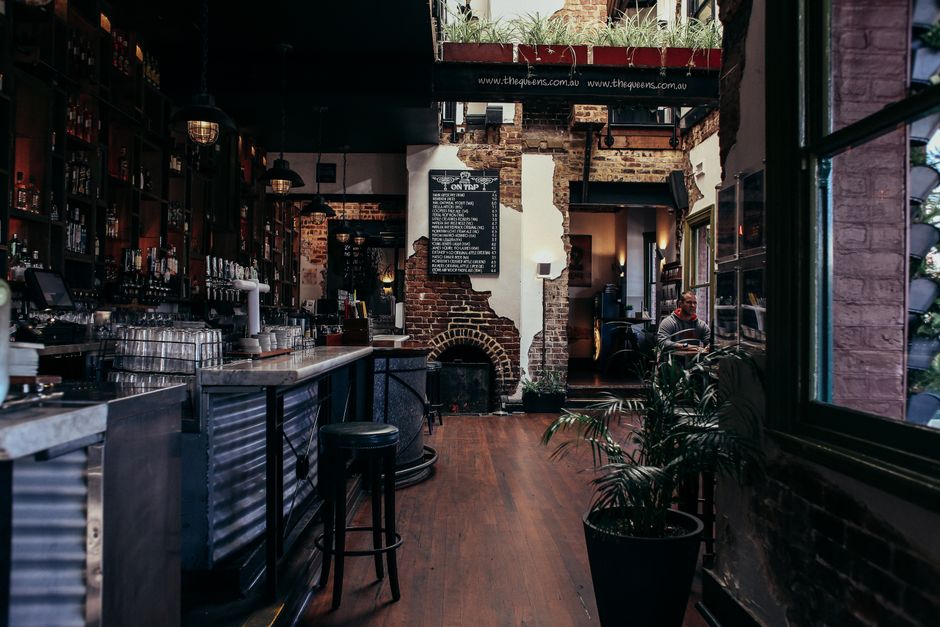
Potted Trees as Space Dividers. Large potted trees—think fiddle leaf figs, monstera, or dracaena—can split an open floor plan into zones without blocking sightlines. They give you privacy without walls and add instant height and drama. Sculptural planters turn trees into statement pieces rather than background décor.
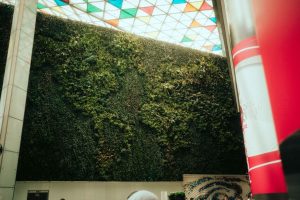
Moss Walls and Living Installations. A moss wall becomes a texture-rich focal point that photographs beautifully and creates an immersive, almost nature-retreat feeling. These work especially well behind a bar, in an entryway, or as a feature wall in a private dining area. They’re bold and memorable.
Ceiling-Mounted Greenery. Hanging plants or trailing vines overhead draw the eye upward, make ceilings feel less heavy, and add layers of interest without eating up table or floor space. This works great in restaurants with high ceilings or where your floor plan is already tight.
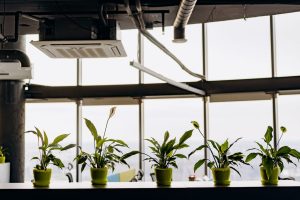
Tabletop and Shelf Displays. Smaller potted plants grouped on shelving, windowsills, or even as centerpieces bring intimate greenery closer to your guests. Grouping plants by height and color creates cohesion and visual rhythm.
If you’re feeling overwhelmed by installation and ongoing care, Nature Indoors specializes in designing and maintaining custom plant installations for commercial restaurant spaces. They can help you figure out what actually works for your layout and light conditions.
Choosing the Right Plants for Your Restaurant
Not every plant thrives in every restaurant. You need to think about light, humidity, foot traffic, and how much hands-on care you can realistically give.
Assess Your Light. Does your dining room get natural light? Is it mostly ambient indoor lighting? Restaurants near windows can support light-loving plants like pothos or philodendrons. Darker interiors need shade-tolerant options like snake plants, ZZ plants, or peace lilies.
Consider Durability. Restaurants are busy, hectic environments. You want plants that can handle occasional bumps, temperature fluctuations, and inconsistent watering schedules. Sturdier varieties hold up better than delicate ones.
Think About Scale and Space. A 6-foot monstera makes sense in a restaurant with high ceilings and open floor plans. In a cozy, intimate space, you might go for smaller plants that cluster together or trailing vines that don’t take up real estate.
Account for Maintenance. Some plants need frequent watering, pruning, or misting. Others are basically set-it-and-forget-it. Be honest about your staff’s capacity. If no one on your team loves plants, go with low-maintenance varieties or consider a maintenance partnership.
Creating Visual Cohesion with Plantings

A scattered collection of random plants feels chaotic. A thoughtfully curated plant display feels intentional and high-design.
Start by deciding on a color story. Do you want neutral greens that blend into the background, or statement-making plants with variegation or deeper tones? Are you pairing plants with warm wood and metallics, or cool neutrals and concrete?
Vary heights and textures. Mix tall trees with trailing vines and compact bushier plants. Combine smooth leaves with texture (think ferns or calathea). Group odd numbers of plants rather than even numbers—three potted plants look more natural than four.
Use your planters deliberately. All-white modern pots create a clean, Scandinavian vibe. Terracotta brings warmth. Sculptural or geometric planters become art pieces. Your pots should echo other design elements in your restaurant—if you have brass fixtures, brass or gold-toned planters make sense.
Practical Installation Considerations
Before you commit to a design, you need to solve some real-world logistics.
Watering Systems. In a busy restaurant, hand-watering every plant is unrealistic. Consider self-watering pots, drip irrigation systems, or grouping plants in areas where watering is easy and won’t disrupt diners. Some restaurants place plants near service areas rather than deep in the dining room for this reason.
Structural Support. Ceiling-mounted displays need proper anchoring to handle weight and vibration from a busy space. Floor-standing large trees need stable, weighted bases so they won’t tip. Make sure your installation is engineered properly.
Accessibility. You don’t want a moss wall blocking emergency exits or a tree forest creating a maze that confuses servers. Plants should enhance flow, not obstruct it.
Artificial vs. Live. Artificial plants are a legitimate option in restaurants where maintaining live plants is genuinely impossible (zero natural light, impossible humidity, high-traffic collision zones). High-quality artificial plants look good and require zero maintenance. The trade-off is that they don’t improve air quality or create that living, organic feeling that real plants bring.
When you’re ready to turn your vision into reality, Nature Indoors can handle the full design and installation process tailored to your restaurant’s specific needs and constraints.
Maintenance and Long-Term Care
A beautiful plant display only stays beautiful if it’s maintained. Dying leaves, pest issues, and neglected pots read as careless to your guests.
Set up a simple watering schedule your staff can follow. Label plants if needed. Do weekly checks for dead leaves or pest problems. Plan for seasonal changes—plants may need different care in summer versus winter.
If maintenance feels like a burden, consider hiring a plant care service to visit monthly or quarterly. They’ll handle watering, pruning, pest management, and plant rotations so your display stays fresh and healthy without adding work to your team.
People Also Ask

What are the best low-maintenance plants for restaurants?
Snake plants, ZZ plants, pothos, and dracaena are nearly bulletproof. They tolerate irregular watering, low light, and neglect. They’re not the most dramatic, but they’re reliable. For higher-impact looks with still-manageable care, monstera, fiddle leaf fig, and rubber plants work well in medium-light spaces.
Can I use real plants in a low-light restaurant?
Yes, but your options narrow. Shade-tolerant plants like peace lilies, pothos, philodendrons, and ZZ plants thrive in low light. If you really want a dramatic plant but your light is terrible, that’s when high-quality artificial plants make sense—they look great and won’t slowly die on you.
How much does a custom plant display cost?
It depends entirely on size, complexity, plant quality, planter choices, and installation requirements. A single large potted tree costs less than a full moss wall installation. If you’re looking for a quote tailored to your space, reach out to Nature Indoors and they can walk you through options and pricing.
Will plants attract bugs or pests to my restaurant?
Healthy plants maintained well don’t. If you’re seeing bugs, it’s usually a sign of pest infestation on the plant itself or moisture issues. Regular inspections and proper care prevent this. If pests do show up, they’re treatable with organic methods that don’t require harsh chemicals in your dining space.