Indoor plant design for apartment living is all about working with what you have, not against it. Whether your apartment is 400 square feet or 1,200, there’s a plant strategy that fits your light, your layout, and your lifestyle.
The truth is, most apartment dwellers assume they’re limited. Low light? Small floor space? No problem. Every apartment condition—tight corners, north-facing windows, humid bathrooms, bone-dry living rooms—has plants that thrive there. The design part is just figuring out *where* they go and *how* to arrange them so they actually enhance your space instead of cluttering it.
Let’s walk through how to design with indoor plants in a way that actually works for apartments.
Start With Your Light Situation
Before you pick a single plant, you need to understand what your apartment receives. This is the foundation of apartment plant design.
Walk around your space at different times of day. Where does the sun actually hit? For most apartments, this means identifying which windows face north, south, east, or west. South-facing windows give you bright, consistent light. North-facing ones give you gentle, low light. East and west windows are somewhere in the middle—though west can get hot and intense in the afternoon.
Be honest about what “bright” means in your space. If you live in a city, tall buildings or trees outside might block light you’d otherwise get. If you’re on a lower floor, you’re getting less. Take photos of your rooms at noon and at 3 p.m. You’ll see exactly what you’re working with.
Once you know your light, the plant selection becomes way easier. Nature Indoors spends time assessing light conditions because it’s truly the first step in designing a plant-filled apartment that actually thrives.
Windowsill Design for Small Spaces
If your apartment is tight on floor space (and whose isn’t), your windows are prime real estate for plants.
Windowsills are the easiest, most natural spot to display plants in an apartment. You don’t need shelving units, no wall-mounting required. Just pots sitting on the sill, getting natural light where plants want it most.
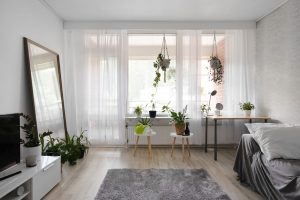
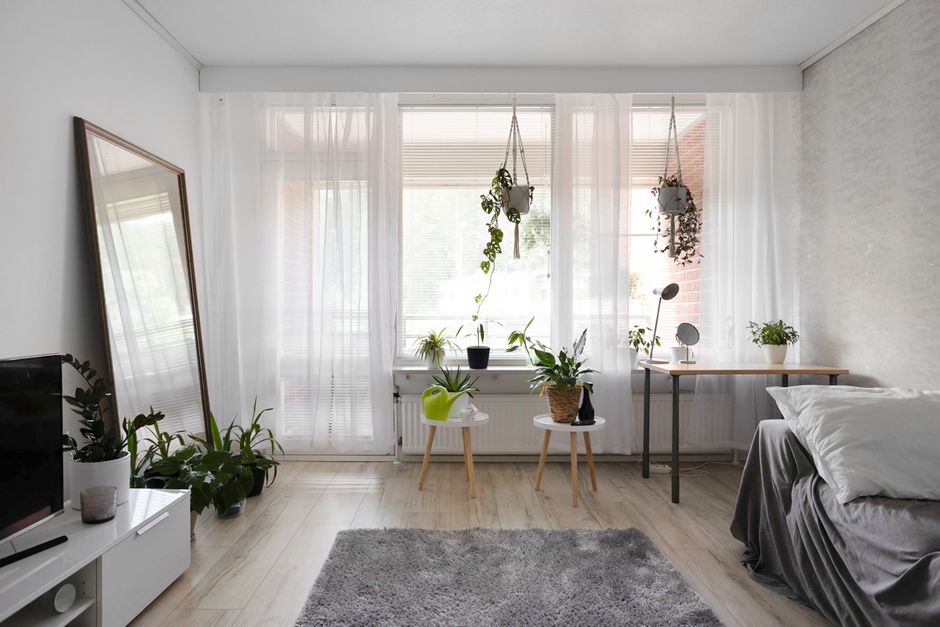
Here’s the practical breakdown: use narrow, tall planters rather than wide, squat ones. They take up less linear windowsill space but hold full-sized plants. Hanging planters suspended from the window frame above the sill also work beautifully and keep your actual sill clear for other things (like opening windows, setting a coffee cup, etc.).
Stack your sill thoughtfully. Put shorter plants in front, taller ones behind. This prevents the shorter plant from being shaded out and creates visual depth. It’s the same principle as a concert stage—everyone needs to be seen.
Group plants in odd numbers (three or five on a sill) rather than even pairs. It feels intentional, not like you’re just filling space. Plus, multiple plants next to each other create a microclimate with slightly higher humidity, which most tropical plants appreciate.
Vertical and Wall-Based Design for Apartments
Walls are your untapped resource in small apartments. You can double your plant count without eating up floor space.
Wall-mounted shelves are the standard move here. Install a floating shelf or two above a desk, beside a bed, or in a corner that feels empty. Lean plants toward you slightly so they’re not sitting perfectly flat—it looks more natural and prevents water from pooling against the wall.
Hanging planters work too, but be thoughtful about placement. They work best in corners where they won’t be in your line of sight constantly, or above furniture where they’re naturally isolated. A trailing plant hanging above a side table looks intentional. A trailing plant hanging over your main seating area where you constantly see the pot bottom? That feels off.
Wall-mounted shelving also lets you control the visual weight of your design. Apartments feel cramped when everything sits on the floor. Moving plants up gives the floor visual “breathing room” even though you’re actually adding more greenery.
Multi-Room Styling Strategy

An apartment doesn’t need plants everywhere to feel like a plant-filled home. Strategic placement in 2-3 rooms creates impact without overwhelm.
Most apartments benefit from plants in the living room (where you spend the most time), the bedroom (where they improve air quality while you sleep), and the bathroom or kitchen (wherever gets decent humidity or light).
Vary your display method across rooms. If your living room has a gallery wall of shelves, keep your bedroom plants to just a windowsill or a single hanging planter. This prevents the whole apartment from feeling like a greenhouse—which sounds nice in theory but can feel cluttered in practice.
Also vary your plant types. A mix of trailing plants, upright growers, and compact specimens feels more curated than an apartment full of similar-looking plants. You’re not doing this for function alone; you’re designing an aesthetic.
Color, Texture, and Minimalist Balance
This is where apartment plant design stops being just about keeping something alive and starts being about your home’s actual vibe.
Plants add visual life through color (deep greens, variegated patterns, occasional flowers) and texture (fuzzy leaves, trailing vines, sculptural forms). In minimalist apartments, even two or three well-placed plants become focal points because everything else is quiet.
If you love modern, minimal design, stick to plants with clean lines: tall upright growers, simple green foliage, minimal flowering. Avoid chaotic trailing vines everywhere; a single trailing plant in a corner works better than vines cascading from multiple walls.
If your style is more eclectic or bohemian, go ahead and layer textures. Mix trailing plants with spiky ones, add patterned leaves next to solid green. Your apartment’s existing aesthetic should guide how many plants feel “right” versus how many feel like too much.
Moisture and Climate Considerations
Apartments have their own climate quirks. Most are drier than outdoor environments (especially if you run AC or heat). Some bathrooms stay damp. Your plant design needs to account for these realities.
Humid apartments (bathrooms, kitchens) can support tropical plants that want constant moisture. Dry apartments need drought-tolerant plants that thrive on neglect. Your living room might be somewhere in between.
If you’re designing for a particularly dry apartment, group moisture-loving plants in the naturally humid spots (bathroom shelf, kitchen corner) and put drought-tolerant plants in the living room and bedroom. This makes maintenance way easier because you’re not fighting your apartment’s natural climate.
Consider running a small humidifier if you love tropical plants but live in a dry space. It benefits both your plants and your skin during winter months. That’s a personal wellness choice as much as a plant-care one.
Practical Apartment Plant Design Maintenance

Here’s what most apartment plant guides skip over: maintenance has to be realistic for your lifestyle.
Related: Residential Plant Design Consultation Austin: Complete Guide
Related: Indoor Plant Installation for Austin Businesses: A Complete Guide
If you travel frequently or work long hours, design your apartment around low-maintenance plants. Don’t fill every windowsill if you’re going to feel guilty about watering. Instead, design strategically with hardy plants that actually fit your routine.
Group plants by watering needs. Put all the plants that want weekly water in one area so you have a routine on Sunday mornings. Put all the drought-tolerant plants in another zone so you only check those once a month. This prevents the mental load of remembering 12 different watering schedules.
If apartment maintenance feels overwhelming, there’s nothing wrong with bringing in professional support. Many plant design services offer maintenance as part of their packages, which is worth considering if you’re designing a plant-forward apartment but know watering and humidity management isn’t your strength. Some local services specialize in apartment plant care and can take that off your plate entirely.
Budget-Smart Design Approach
You don’t need a lot of expensive, mature plants to create an impactful apartment design. Start small.
Begin with one or two plants in high-traffic areas—the space where you’ll see them most and feel their impact. A single large plant on a console table or a trio of smaller ones on a windowsill does more for your apartment’s feel than seven scattered plants you forgot about.
Add plants over time. This lets you learn what actually works in your apartment’s light and climate before investing in a whole jungle. Plus, it’s more affordable than stocking your entire apartment at once.
Once you have a solid foundation, it becomes easier to add in the right spots. You’ll actually *know* which light conditions are which, which corners stay dry, where you need trailing plants versus upright ones.
Bringing It All Together
Apartment plant design is just intentional decision-making. What light do you have? How much floor space can you spare? Which rooms feel empty? What’s your actual maintenance capacity?
Answer those questions first, then place your plants accordingly. That’s it. You’re not designing a botanical garden; you’re adding greenery to your actual home in a way that makes sense for your life.
If you’re looking for guidance on what specific plants work best for your apartment’s conditions, or you want professional help designing a layout that actually fits your space, Nature Indoors offers design consultations tailored to apartment living. They work with light assessments and your actual lifestyle, not some generic formula.
Does every apartment have enough light for plants?
Yes. Even north-facing, low-light apartments can support plants. Pothos, snake plants, ZZ plants, and cast iron plants thrive in low to indirect light. You might not have trailing philodendrons cascading everywhere, but you absolutely have options. The key is matching plants to your available light rather than forcing sun-lovers into dim corners.
How many plants should I have in my apartment?
There’s no magic number. It depends on your space, your style, and your maintenance capacity. A minimalist apartment with three intentional plants can feel more plant-forward than a cluttered space with fifteen struggling plants. Start with one or two and add as your confidence grows. Quality over quantity always wins in apartment design.
What’s the best place to start with apartment plant design?
Begin with your brightest window and one beautiful plant you actually like looking at. This teaches you how light works in your apartment and establishes a watering routine. From there, you can expand to other rooms and conditions. Don’t overthink it; just pick a spot and a plant and start.
Can plants work in apartments without natural light?
Yes, but you’ll likely need supplemental grow lights. LED grow lights are affordable and get smaller every year. A shelf with a small grow light above it can support shade-loving plants in interior rooms or closets. Research shows indoor plants under LED lighting can thrive with 12-16 hours of daily light, making them viable for apartments with truly no natural light sources.