Your home office needs more than a desk and chair—it needs life. Styling plants in home offices is one of the fastest ways to transform a bland workspace into somewhere you actually want to spend eight hours a day. The good news? You don’t need a green thumb or a fancy design degree to pull it off.
The trick is knowing how to arrange plants intentionally so they feel like part of your design, not an afterthought. Let’s walk through exactly how to do that.
Group Your Plants for Maximum Impact
Spreading one lonely plant in the corner of your office is the styling equivalent of leaving your home unfurnished. You’re not getting the full effect.
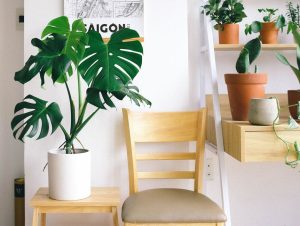
Instead, cluster plants together. A grouping of three to five plants creates a focal point that actually draws the eye and makes your office feel intentional and finished. You can place a cluster on a corner shelf, a side table, or even the floor if you have the space.
When you group plants, they also help each other thrive. They create a microclimate with slightly higher humidity and protect each other from direct heat or cold spots. It’s a win for both aesthetics and plant health.
Match Your Pots for a Cohesive Look
This is where most people slip up. They buy plants one at a time from different sources and end up with five different pot styles. It looks chaotic.
For a polished, intentional look, use pots that match in style, material, or color—especially within your grouped display. You don’t need every pot in your office to match, but the plants you’re clustering together should feel like a set.
Think about using the same ceramic finish, the same neutral color family, or the same minimalist style. It’s a small detail that makes a huge difference in how “designed” your space feels. Even if your plants are different sizes, matching pots tie them together visually.
Play with Foliage Colors and Textures
Green is calming, but it doesn’t have to be boring. Most offices have boring green for this exact reason—people assume plants only come in one shade.
Not true. Indoor plants come in deep emerald, light lime, silvery sage, burgundy, and even near-white. Mixing these colors in your grouped display creates depth and visual interest without feeling chaotic.
Pair a plant with dark, glossy leaves next to one with lighter, delicate fronds. Put a trailing plant with thin foliage next to one with thick, bold leaves. This textural variety keeps your eyes engaged and makes the grouping feel thoughtfully curated.
The added benefit? Research shows that exposure to plants in your workspace reduces stress and boosts focus, especially when you’re visually engaged with them.
Use Repetition to Build Visual Power

Here’s a designer trick: repeating the same plant in your display amplifies its impact. Three plants of the same type clustered together feel bolder and more intentional than three completely different plants.
You could do three identical plants in matching pots on a shelf, or a pair of matching plants flanking your desk. Repetition signals intention. It says, “I chose this on purpose, not by accident.”
This also makes styling easier. Instead of trying to find five different plants that work together, you pick one or two varieties you love and let them do the heavy lifting.
Choose Low-Light Plants for Realistic Office Spaces
Most home offices don’t have windows. Or if they do, the light isn’t direct. That’s fine—there are over 30 indoor plants that thrive in low light.
Related: How to Choose Plants for Your Office: A Practical Guide
Related: Benefits of Having Plants in Your Office: A Complete Guide
These plants don’t just survive in dim corners; they actually prefer indirect or filtered light. They’re not struggling. They’re happy. So you can style your office with real greenery anywhere, not just near a window.
Low-light plants also tend to be more forgiving if you forget to water or miss a day of care. They’re slower-growing and lower-maintenance, which is perfect for someone juggling a full work schedule.
Layer Plants with Complementary Objects
Your plants don’t live in isolation. They share shelf space with books, photo frames, and desk accessories. Use this intentionally.
Tall, architectural plants can anchor a corner next to a stack of books. Trailing plants look beautiful cascading past a small sculpture or piece of art. Low plants fill the negative space on a shelf between taller objects.
Think of your plants as part of a larger display, not as separate items. When a plant sits next to something wooden, ceramic, or metallic, all those textures talk to each other. The whole vignette feels designed, not just decorated.
Consider Air Quality Alongside Aesthetics
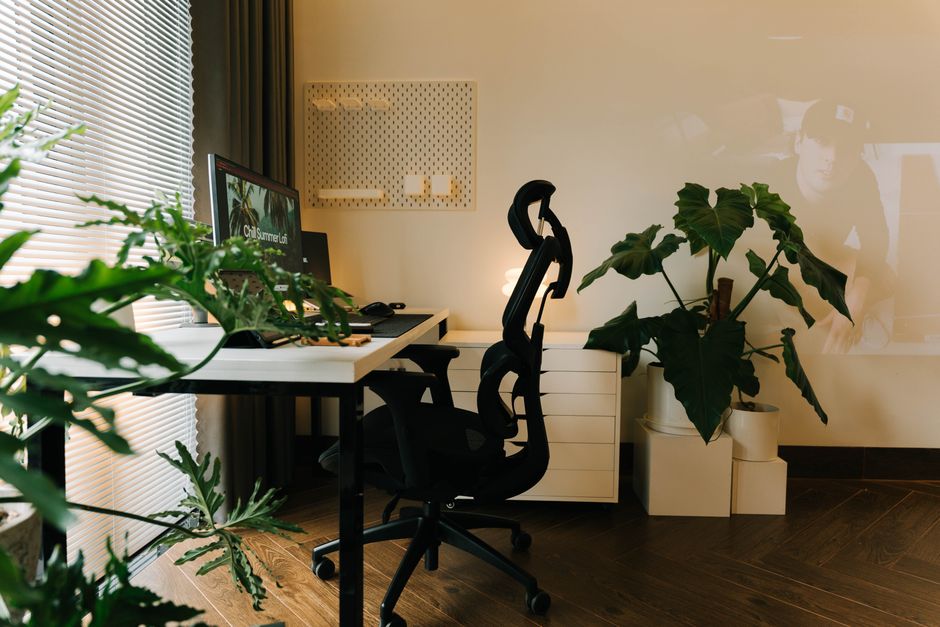
Bonus benefit: some plants naturally purify the air in your office. A workspace with better air quality helps you focus better and feel less fatigued by the end of the day.
You don’t need to optimize for air purification above all else—aesthetics and your ability to keep the plant alive matter more. But if you’re choosing between two plants you like equally, the one that also filters your air is a smarter choice.
Related: Benefits of Plants in Commercial Offices: Why They Matter
If you’re not sure which plants work best in your specific office lighting and layout, Nature Indoors offers custom design consultations to nail down the perfect setup for your space.
Layer Your Plant Heights
A display where all plants are the same height feels flat. Vary it.
Use a tall floor plant as a backdrop, mid-sized plants in the middle, and trailing plants at ground level or hanging from a shelf edge. This layering creates visual rhythm and makes your grouping feel more dynamic.
You can achieve height variation with stands, shelves, hanging planters, or a mix of upright and cascading plants. The goal is to break the horizontal line and add dimension.
Keep Your Styling Flexible
Your first attempt doesn’t have to be perfect. Live with your plants for a week or two, then adjust.
Maybe a plant needs more light and you move it closer to the window. Maybe you realize you want one more trailing plant to soften a hard corner. Maybe you swap pot colors after you see how they look together.
Styling your home office with plants is iterative. You learn what works by testing it. Give yourself permission to experiment.
Work with Your Office’s Existing Design
The best plant styling feels like it belongs in your space, not like it was pasted on top of it.
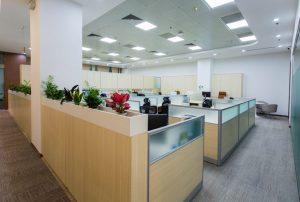
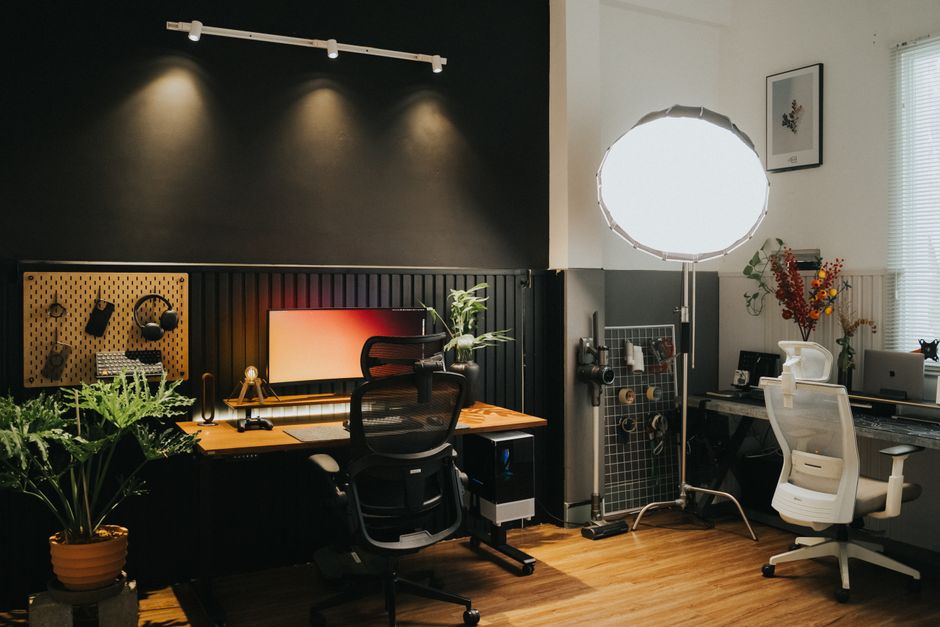
If your office is modern and minimal, lean into sculptural plants with clean lines in simple pots. If your space is warm and eclectic, you can play with more textured plants and varied pot styles. If your office is corporate and neutral, keep plant colors muted and groupings compact.
Your plants should feel like a natural extension of the design you already have, not like they’re fighting against it. When they fit your space’s vibe, the entire room feels more intentional.
How many plants should I put in a home office?
There’s no magic number. It depends on your space size and how busy your office already is. A small office with limited shelving might look best with one well-styled cluster of three plants. A larger office can handle two or three clusters or a mix of grouped plants and statement pieces. Start with one cluster and add more if your space feels empty.
What if my home office has no natural light?
You have tons of options. Choose low-light plants that thrive in indirect or artificial light. Many office plants actually prefer dim corners. You don’t need direct sunlight to have a beautiful, healthy plant display.
Related: Plants for Dark Corners in Offices: 9 Low-Light Winners
Can I style plants if I’m not good at keeping them alive?
Absolutely. Pick low-maintenance, low-light plants that are forgiving if you forget to water. Start with just two or three plants instead of five. Focus on plants that are nearly impossible to kill. Success builds confidence, and confident plant parents have prettier, healthier displays.
Should all my pots match exactly?
Not necessarily. They should coordinate. Use the same color family, material, or style within your grouped display. You could have all white pots, all ceramic, or all minimalist. They don’t need to be identical, but they need to feel intentional together.