High humidity spaces can feel tricky for indoor plant parents, but here’s the good news: they’re actually ideal for a lot of gorgeous tropical plants that struggle elsewhere in your home. The challenge isn’t the humidity itself—it’s managing watering, airflow, and pests to keep your plants healthy. Let me walk you through indoor plant care for high humidity spaces so your bathroom, kitchen, or steamy home office becomes a lush jungle instead of a plant graveyard.
Understanding Your Humidity Level First
Before you buy a single plant, figure out how humid your space actually is. Most tropical plants love humidity levels between 30 and 65 percent—that sweet spot where they thrive without getting stressed. You can grab a cheap humidity meter (they’re like $10 online) and check your problem areas.
Bathrooms after a shower? Probably 70-80 percent. Your kitchen while cooking? Could be 60 percent or higher. If you’re consistently above 65 percent, you’re in what I call “tropical plant heaven,” but you’ll need to pay attention to a few care basics or you’ll end up with mold, root rot, or pest explosions.
The Watering Rule That Stops Most People
This is the biggest mistake: people think humid spaces mean you water less, but that’s backwards. High humidity can actually *hide* overwatering problems because moisture doesn’t evaporate as fast from the soil. Your plant’s roots can rot in soggy soil even though the air feels dry to you.
The rule is simple: stick your finger about an inch into the soil. If it feels dry, water. If it feels moist, wait. That’s it. Don’t water on a schedule. Don’t assume because the air is humid that the soil is wet. Check the soil every time.
In high humidity, you might water your plants less often than you would in a dry living room, but you could also water them *more* if the air is so humid that the soil stays damp for days. It’s about the soil, not the air.
Why Temperature Matters as Much as Humidity
Here’s something people forget: humidity and temperature work together. A humid, cold bathroom is different from a humid, warm bathroom. Tropical plants want warm humidity, not cool dampness.
Aim to keep humid spaces between 65 and 75 degrees Fahrenheit if you can. If your bathroom stays chilly or gets drafts from an exhaust fan, that cold+humid combo can stress plants and invite mold. Make sure your space has decent air circulation—crack a window, run a fan, or just leave the door open sometimes so air can move.
Group Your Plants to Create a Microclimate
One plant in a huge humid room might struggle. Five plants clustered together? They create their own little ecosystem that they love. Plants release moisture through their leaves, which raises humidity even more around their neighbors.
Grouping also makes it easier to keep an eye on all your plants at once. You can check soil moisture, spot pest issues, and see which ones are thriving faster. If you want to level up, place your pots on humidity trays—shallow trays filled with pebbles and a little water. The water evaporates around the plants without waterlogging the roots.
Light Still Matters in Humidity

Don’t assume that because a space is humid, it’s automatically good for plants. Humidity doesn’t replace light. A humid bathroom with no natural window is actually a tough spot because plants need both moisture *and* brightness to photosynthesize.
Most tropical plants for humid spaces want medium to bright indirect light. That means light filtered through a sheer curtain or coming from a window they don’t sit directly in front of. If your bathroom or kitchen has low light, you’ll either need to choose shade-tolerant plants like pothos or snake plants, or add a simple grow light. If you’re unsure which plants would work best in your specific space, Nature Indoors can help you figure out the right combination of humidity, temperature, and light for your home.
Keeping Foliage Clean to Stop Pests
High humidity is a magnet for spider mites, mealybugs, and scale. These pests love warm, damp conditions. Your job is to make your plants an unappealing home for them.
Wipe down your plant leaves every week or two with a soft, damp cloth. You’re removing dust and checking for early signs of pests at the same time. If you spot tiny bugs, webbing, or sticky residue on leaves, catch it early. Spray the affected plant with insecticidal soap (any garden center sells it) and isolate it from your other plants for a week or so.
Clean leaves also photosynthesize better, so your plants grow faster and healthier.
Feed Your Plants During Growing Season
Humid spaces often stay warm year-round, especially indoors. That means your plants might grow even when it’s winter outside. Feed them with a balanced liquid fertilizer about once a week during spring and summer, and every two weeks in fall and winter.
Don’t over-fertilize thinking humidity means faster growth. Too much fertilizer actually stresses plants and can make pest problems worse. Follow the label instructions on whatever fertilizer you choose.
Which Plants Actually Love High Humidity
Not all plants are created equal in humid spaces. Some thrive, others rot. Here are the winners for bathrooms, kitchens, and other high-humidity rooms:
- Pothos and philodendrons – almost impossible to kill, they love humidity and shade
- Fiddle-leaf figs – dramatic and beautiful, they want humidity and bright indirect light
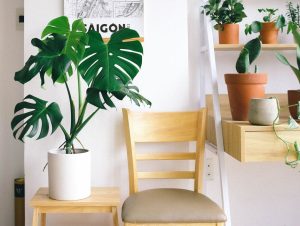
- Monstera – huge, split leaves, super trendy, love warmth and humidity
- Ferns – classic humid-space plant, but they need consistent moisture and bright indirect light
- Calathea and maranta – patterned foliage, love humidity, prefer medium light
- Snake plants – humidity doesn’t bother them, they’re tough and require minimal watering
- ZZ plants – same deal, very low-maintenance and adaptable
Watch Out for These Common Problems

Even in ideal conditions, things can go wrong. Keep your eyes open for these red flags:
- Yellow leaves that feel mushy – usually root rot from overwatering. Stop watering, check if the pot has drainage, and repot if the soil smells bad.
- Brown leaf tips – could mean humidity is actually too high with poor air circulation, or the plant needs more light. Improve airflow and check your light levels.
- White powder or spots on leaves – fungal issues thrive in humidity. Increase airflow, reduce misting (if you’ve been doing that), and wipe leaves with a damp cloth.
- Tiny bugs or webbing – pests. Clean immediately and treat with neem oil or insecticidal soap.
Do You Need to Mist Your Plants?
A lot of plant blogs say to mist your plants in humid spaces. I’d skip it. Misting adds more surface moisture that can encourage fungal problems, and the humidity boost only lasts a few minutes anyway. If your space is already humid, you don’t need to mist. Save yourself the work and just let the air do its job.
Getting a Maintenance Plan in Place
The hardest part of humid-space plant care is staying consistent. You need to check soil moisture weekly, clean leaves regularly, and spot pests early. If that sounds like a lot for your schedule, Nature Indoors offers maintenance services designed to keep your indoor plants healthy without the guesswork. It’s one less thing to worry about while you enjoy your green space.
Related: Indoor Plant Care Without Toxic Chemicals: A Complete Guide
Related: Plant Care Service for Apartment Complexes: A Complete Guide
Related: Indoor Plant Design for Apartment Living: Complete Guide
Key Takeaways for High Humidity Plant Care
Humid spaces aren’t a plant killer—they’re an opportunity. Your bathroom, kitchen, or steamy home office can become a tropical oasis if you:
- Check soil moisture before watering, not just the humidity level
- Maintain warm temperatures (65-75°F) alongside humidity
- Make sure plants get adequate light for their species
- Keep foliage clean to prevent pests
- Group plants together to create a thriving microclimate
- Feed regularly during growing season
- Watch for signs of root rot, fungal issues, or pests
What’s the ideal humidity range for indoor plants?
Most tropical houseplants thrive between 30 and 65 percent humidity. Your bathroom after a shower or your kitchen while cooking probably falls into that range. You can measure it with an inexpensive humidity meter to know exactly where you stand.
Can you overwater plants in high humidity?
Absolutely. High humidity doesn’t dry out soil faster, so overwatering is actually easier in humid spaces. The soil stays damp longer, and roots can rot even though the air feels moist. Always check the soil first—if it’s dry an inch down, water. If it’s moist, wait.
Which plants are best for bathrooms and kitchens?
Pothos, philodendron, monstera, fiddle-leaf fig, snake plant, and ZZ plant all handle humidity well. Ferns and calathea also love humidity if you give them the right light. Choose based on your light levels and how much attention you want to give them.
How do you prevent pests in humid spaces?
Wipe plant leaves weekly with a damp cloth to remove dust and spot pests early. Keep air moving with a fan or open window. Isolate any infested plant immediately and treat with insecticidal soap or neem oil. Humid environments attract spider mites and mealybugs, so regular inspection is your best defense.